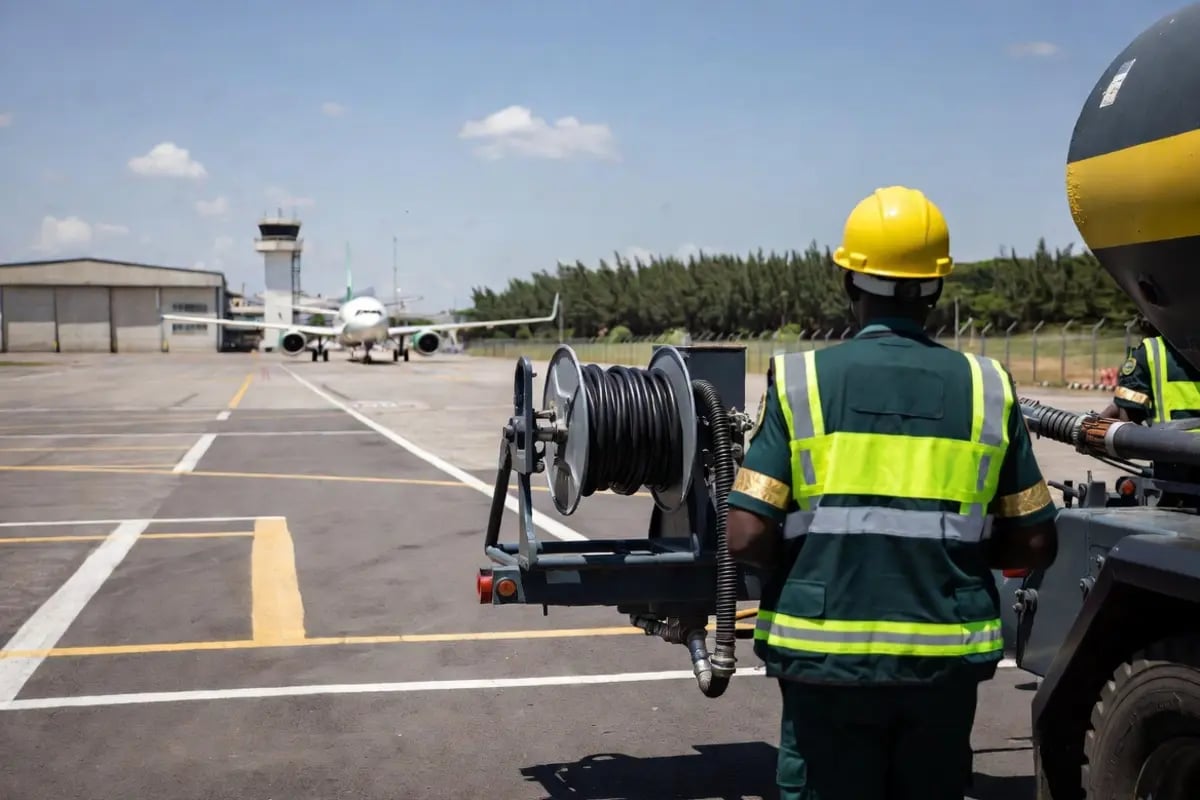
Why Aviation Specify Apex Africa Petroleum
Aviation fuel supply is among the most technically exacting procurement disciplines in the downstream petroleum sector. The consequences of specification deviation, handling failure, or documentation lapse are not measured in operational inconvenience — they are measured in airworthiness. Airlines, charter operators, ground handlers, and airport authorities operating across Ghana and Togo require a supply partner whose internal protocols are calibrated to match the severity of that reality.
Apex Africa Petroleum approaches aviation fuel supply through the same structured, HSE-led discipline it applies across every institutional sector — with additional layers of handling control, documentation rigour, and chain-of-custody verification that aviation operations demand. Every transfer is coordinated to airport and operator standards, and every batch moves under a documentation framework that supports airworthiness records, regulatory audits, and operator compliance requirements without exception.
Specification Requirements Unique to Aviation
Aviation turbine fuels — principally Jet A-1 — carry product quality requirements that leave no interpretive margin. Flash point tolerances, thermal stability profiles, density windows, and additive specifications are set by international aviation standards bodies and are non-negotiable at the point of transfer. Ground handling procedures must further protect product integrity against contamination, particulate ingress, and water entrainment at every stage from road tanker to fuelling vehicle to aircraft.
At Ghana’s commercial airports and across Togo’s aviation infrastructure, supply coordination must account for airside access protocols, fuelling schedule alignment with aircraft turnaround windows, and the documentation requirements of both national civil aviation authorities and individual operator quality programmes. Apex Africa Petroleum structures its aviation supply engagements around these layered requirements — not as compliance minimums, but as the operational baseline below which no aviation fuel delivery is released.
Recommended Services for Aviation
- Jet A-1 procurement and structured delivery coordinated to airport fuelling schedules
- Chain-of-custody documentation packages supporting operator and regulatory audit requirements
- HSE-led handling oversight at transfer points, including contamination control and quality verification
- Supply planning and stock positioning for charter operators, ground handlers, and aviation facility managers
- Documentation and compliance support for civil aviation authority fuel quality records across Ghana and Togo
Notable Project Types
Aviation fuel supply engagements through Apex Africa Petroleum have encompassed scheduled deliveries to ground handling operations at Ghana’s primary international gateways, as well as coordinated supply arrangements for charter operators managing irregular and demand-responsive flight programmes. In each context, the supply structure is built around the operator’s turnaround cadence — not adapted to it after the fact.
Cross-border supply coordination between Ghana and Togo has also formed part of the aviation supply portfolio, supporting operators and ground services whose programmes span both jurisdictions. These engagements require synchronised documentation, border crossing compliance, and product quality continuity across supply chain transitions — disciplines that Apex Africa Petroleum embeds as standard operating procedure across all cross-corridor aviation supply work.
Compliance & Standards
- Full alignment with civil aviation authority fuel quality and handling requirements in Ghana and Togo
- Product documentation supporting Jet A-1 specification verification at each point of transfer
- HSE-led handling protocols at all transfer interfaces, including airside and vehicle-to-aircraft transitions
- Chain-of-custody records structured to support airline, charter operator, and regulatory audit requirements
- Contamination and water-check procedures embedded at every handling stage prior to aircraft uplift
- Supply scheduling and documentation coordinated to airport ground operations and fuelling authority protocols