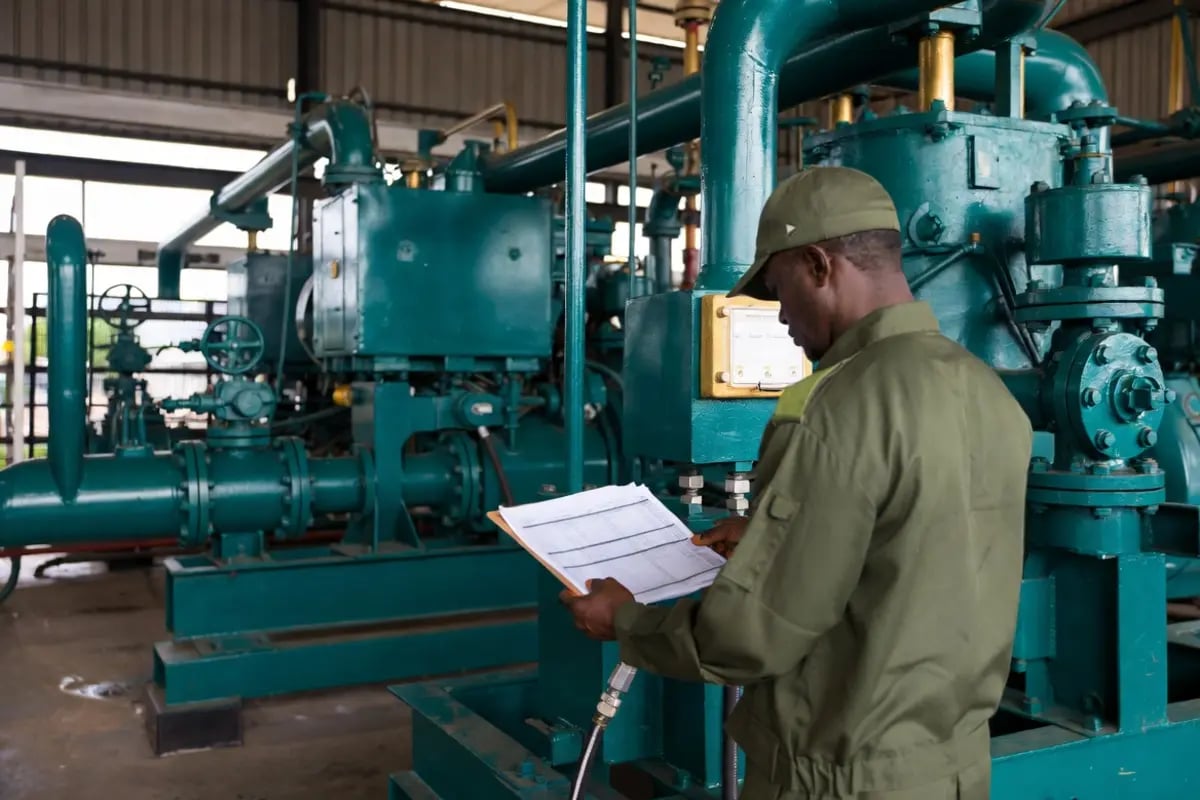
Why Power & Generation Operations Specify Apex Africa Petroleum
Thermal power facilities and standby generation systems operate under a fundamental constraint that most procurement frameworks underestimate: fuel is not a commodity input — it is an operational dependency. When a grid-support facility or an independent power producer experiences a supply interruption, the downstream consequences extend far beyond the generator room. Apex Africa Petroleum is structured to serve this reality, delivering institutional-grade fuel supply across Ghana and Togo with the scheduling discipline, documentation integrity and HSE-led handling that power and generation operations require at every transfer point.
Standby generation at the institutional scale — covering data centres, hospital complexes, government facilities and industrial campuses — demands the same supply rigour as continuous baseload generation. Apex Africa Petroleum applies consistent procurement structure and transfer documentation irrespective of whether the client operates a single critical-load generator or a multi-unit thermal plant. The discipline of supply does not change with the size of the contract.
Specification Requirements Unique to Power & Generation
Fuel quality at the point of delivery is a specification matter for power generation, not merely a logistics matter. Gas oil and heavy fuel oil destined for generation equipment must meet OEM viscosity, sulphur and contamination thresholds to protect injection systems, combustion chambers and emissions controls. Apex Africa Petroleum’s supply chain maintains documented quality assurance at each stage of the procurement-to-delivery cycle, ensuring that fuel reaching a generation asset has been handled, stored and transported under conditions appropriate to the receiving equipment’s specification.
Regulatory compliance within the energy and utilities sector in Ghana — governed by frameworks overseen by the Energy Commission and the National Petroleum Authority — requires that fuel supply to power facilities be conducted under licensed, documented and traceable processes. Apex Africa Petroleum operates within these regulatory parameters, providing the transfer records, delivery certificates and chain-of-custody documentation that power facility operators and their regulatory reporting obligations require.
Recommended Services for Power & Generation Operations
- Scheduled bulk fuel supply — structured delivery cycles aligned to generation load schedules, planned maintenance windows and seasonal demand variation
- Emergency and priority resupply — rapid-mobilisation supply protocols for unplanned drawdown events, ensuring critical-load facilities are not exposed to extended fuel risk
- Fuel quality documentation — batch-level records accompanying every delivery, supporting OEM compliance and regulatory audit requirements
- Tank farm delivery coordination — managed transfer to on-site storage infrastructure with HSE-compliant decanting and spill-containment procedures
- Cross-border supply — Ghana and Togo — structured procurement and logistics for generation assets operating across both jurisdictions, with documentation appropriate to each regulatory environment
Notable Project Types
Apex Africa Petroleum has structured supply programmes for thermal generation facilities serving industrial anchors in Ghana’s manufacturing and extractive corridors, where continuous power supply is a direct operational dependency rather than a background utility. These engagements typically involve scheduled delivery cycles calibrated to tank capacity, burn rate and planned outage windows — with documentation packages designed to satisfy the facility’s own regulatory and lender reporting requirements.
Standby and peak-shaving generation at institutional campuses — including government administrative complexes, large-format healthcare facilities and mission-critical data infrastructure — represents a distinct supply category where reliability of delivery is the primary specification criterion. For these clients, Apex Africa Petroleum provides procurement structures that treat fuel supply as a managed operational service rather than an ad-hoc purchase, with consistent handling standards maintained across every transfer.
Compliance & Standards
- National Petroleum Authority (NPA) licensing and documentation requirements — Ghana
- Energy Commission supply and handling compliance — Ghana
- HSE-led transfer protocols at every delivery and decanting point
- Chain-of-custody documentation maintained from procurement origin to final delivery
- OEM-compatible fuel quality handling and storage standards
- Cross-border regulatory documentation for supply operations extending into Togo