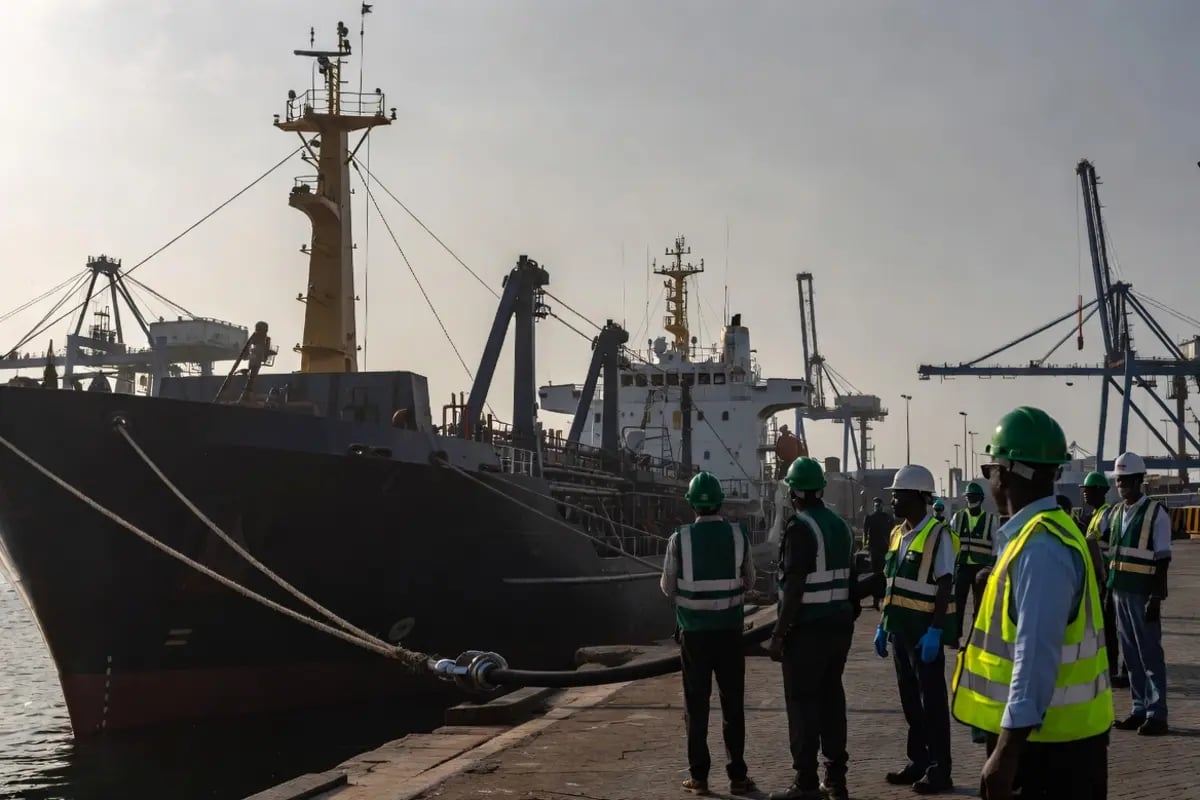
Why Marine & Bunkering Operations Specify Apex Africa Petroleum
Port and shipping operations demand a petroleum supply partner capable of matching the precision of vessel schedules, customs windows, and flag-state compliance requirements. Delays at berth carry direct cost consequences — idle time, charter penalties, and cascading schedule disruption. Apex Africa Petroleum structures its marine and bunkering supply around these operational realities, coordinating supply logistics, documentation packages, and HSE-compliant transfer protocols so that fuel reaches the vessel on schedule and at specification.
Across Ghana’s principal port corridors and into Togo’s port zone, the discipline that defines our institutional supply model is equally applied to marine operations. Every bunkering engagement is handled as a documented institutional transaction — quantity verification, transfer records, safety compliance sign-off, and full chain-of-custody documentation issued at each transfer point.
Specification Requirements Unique to Marine & Bunkering
Marine fuel procurement is governed by a layered compliance framework that simultaneously satisfies port authority requirements, flag-state fuel quality obligations, and vessel operator standards. The product specification — whether Marine Gas Oil (MGO) or other distillate grades used across regional trade routes — must be traceable to a documented supply chain with no ambiguity at the transfer interface. Bunker delivery notes, quantity measurement records, and HSE transfer certifications are not optional addenda; they are the foundation on which any compliant bunkering operation is built.
Ghana Ports and Harbours Authority protocols and Togolese port zone requirements each carry distinct procedural obligations. Apex Africa Petroleum’s documentation discipline is structured to satisfy both regulatory environments, ensuring that bunkering operations across both jurisdictions proceed without administrative interruption or compliance exposure to vessel operators.
Recommended Services for Marine & Bunkering
- Marine Gas Oil (MGO) supply — structured procurement and delivery to vessel at berth, with full quantity verification and documentation
- Bunkering logistics coordination — scheduling, port clearance liaison, and supply-chain sequencing aligned to vessel arrival windows
- HSE-compliant transfer management — supervised fuel transfer with safety protocol adherence and incident-prevention oversight at every transfer point
- Bunker documentation packages — delivery notes, chain-of-custody records, and transfer certificates issued to flag-state and port-authority standards
- Emergency and unscheduled supply — responsive supply coordination for vessels requiring out-of-schedule bunkering within Ghana and Togo port zones
Notable Project Types
Vessel operators on West African trade routes — including bulk carriers, container feeders, and offshore support vessels — require reliable bunkering supply within compressed port call windows. Apex Africa Petroleum has structured supply engagements across these vessel categories, coordinating documentation and logistics to ensure that bunkering is completed within the operational timeline of the port call without requiring the vessel operator to manage multiple supply-chain intermediaries.
Marine operations for government and parastatal fleets — including patrol vessels, fisheries enforcement craft, and port authority workboats — present additional documentation and accountability requirements that mirror the institutional procurement standards of public-sector supply. These engagements are handled with the same structured procurement rigour applied across all Apex Africa Petroleum supply operations, with formal delivery records and compliance documentation maintained for each transfer.
Compliance & Standards
- Adherence to Ghana Ports and Harbours Authority bunkering protocols and port operational requirements
- Compliance with Togolese port zone regulatory requirements for marine fuel supply and transfer
- HSE-compliant transfer procedures at every bunkering interface — supervised, documented, and signed off
- Bunker delivery note issuance aligned to international marine fuel transfer standards
- Full chain-of-custody documentation maintained from procurement source through vessel transfer
- Quantity verification and measurement records provided as standard on every bunkering engagement