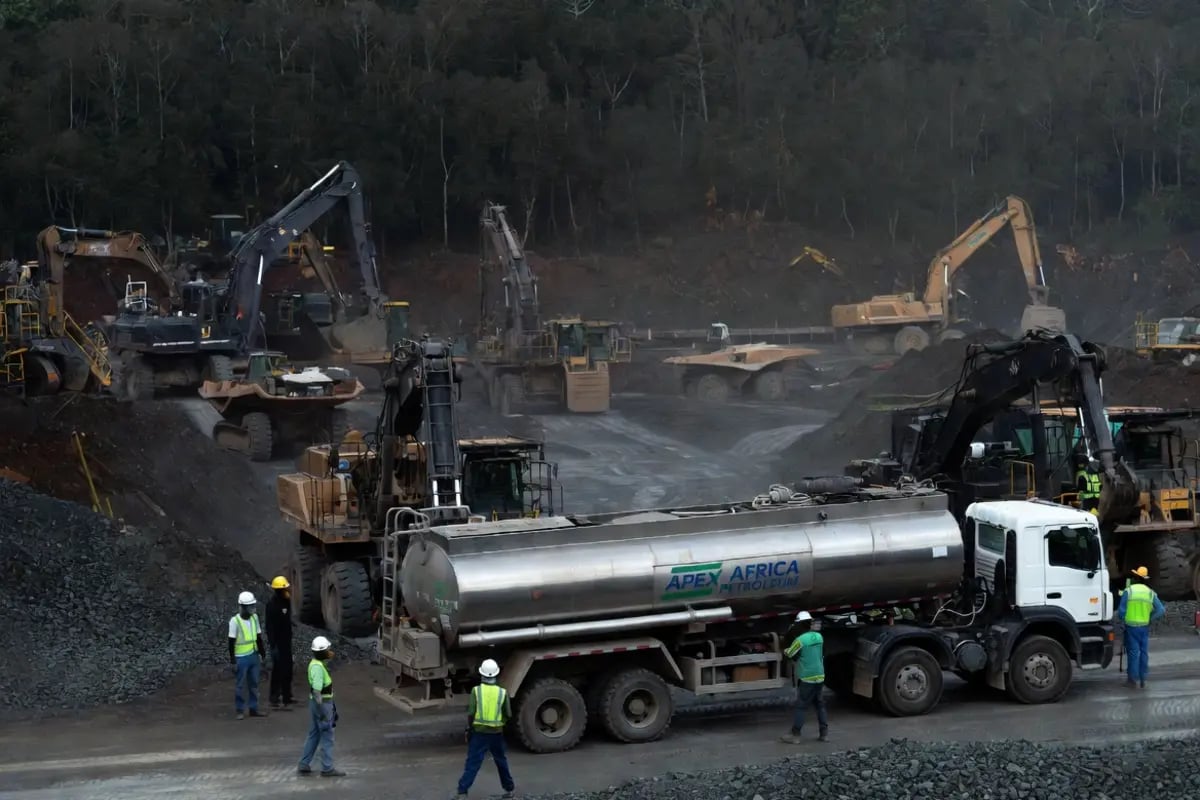
Why Mining Operations Specify Apex Africa Petroleum
Mining operations across Ghana and Togo impose fuel and lubricant demands that few supply structures can meet with consistent rigour. The operational tempo of a producing mine — where haul trucks, drill rigs, ball mills and auxiliary generators run continuous shift patterns — cannot absorb supply interruptions or product inconsistencies. A single substandard fuel delivery risks equipment contamination, unplanned downtime and cascading production losses that dwarf the cost of the fuel itself. Apex Africa Petroleum is structured for exactly this environment: a supply chain built on documented procurement, HSE-led transfer protocols and product integrity at every handoff.
The discipline that defines institutional petroleum trading is not incidental to mining supply — it is the baseline the sector requires. Mines operate under layered compliance obligations, frequently on remote sites with limited corrective options, and procurement officers carry direct accountability for continuity. Apex Africa Petroleum’s documentation-first approach — from order confirmation through delivery manifest and transfer sign-off — gives procurement and operations teams the audit trail that both internal governance and regulatory oversight demand.
Specification Requirements Unique to Mining Operations
Mining operations present a set of fuel and lubricant constraints that differ materially from standard commercial or transport accounts. Bulk diesel supply must be managed to site-specific storage configurations, with transfer scheduling aligned to shift rotations rather than standard business hours. Fuel quality must meet the tolerance requirements of heavy equipment manufacturers, particularly for haul-fleet engines operating under sustained high-load conditions in dusty, high-temperature environments across Ghana’s mining corridors and Togo’s extractive zones.
Lubricant specifications are equally exacting. Open-cast and underground operations alike depend on hydraulic fluids, gear oils and specialty greases that conform to equipment OEM requirements — deviation from specification accelerates wear and voids manufacturer warranties on high-capital assets. HSE requirements governing on-site fuel storage, secondary containment and transfer documentation are non-negotiable under Ghanaian mining regulations and Togo’s extractive sector frameworks. Apex Africa Petroleum’s handling and documentation protocols are designed to satisfy these requirements as a matter of standard operating procedure, not exception.
Recommended Services for Mining Operations
- Bulk diesel supply — scheduled and emergency delivery to mine-site storage, with full transfer documentation
- Lubricant and hydraulic fluid supply — OEM-aligned specification products for haul fleets, drills and plant equipment
- On-site fuel management advisory — storage configuration, stock rotation and consumption tracking support
- HSE-led transfer and documentation — compliant handoff records for regulatory audit and internal governance
- Structured procurement coordination — supply scheduling integrated with production calendars and maintenance windows
Notable Project Types
Apex Africa Petroleum has structured supply arrangements for large-scale open-cast mining operations requiring continuous bulk diesel availability across multiple on-site storage points. These engagements typically involve coordinated delivery scheduling to ensure tank inventory remains within operational parameters throughout the production cycle, with documentation packs generated at every transfer point for the client’s environmental and compliance records.
Beyond primary fuel supply, the firm has managed lubricant programmes for mines operating mixed heavy equipment fleets — where a single site may require multiple lubricant grades across haul trucks, excavators, compressors and auxiliary generators. Supply in these contexts requires precise product segregation, labelling and delivery sequencing to eliminate the risk of cross-contamination, with all transfers conducted under HSE protocols appropriate to the site’s safety classification and prevailing permit conditions.
Compliance & Standards
- Adherence to Ghana’s Petroleum Commission supply and handling regulations for downstream product distribution
- Compliance with Togo’s extractive sector fuel supply and storage requirements
- HSE transfer protocols at every delivery point — spill prevention, containment verification and incident documentation
- Full chain-of-custody documentation from supplier dispatch through client acceptance
- Product integrity verification procedures aligned with heavy equipment OEM fuel and lubricant specifications
- Structured record retention supporting both internal audit and regulatory inspection readiness