The problem
Institutional buyers need a documented, HSE-disciplined source for fuel storage & depot services.
Our approach
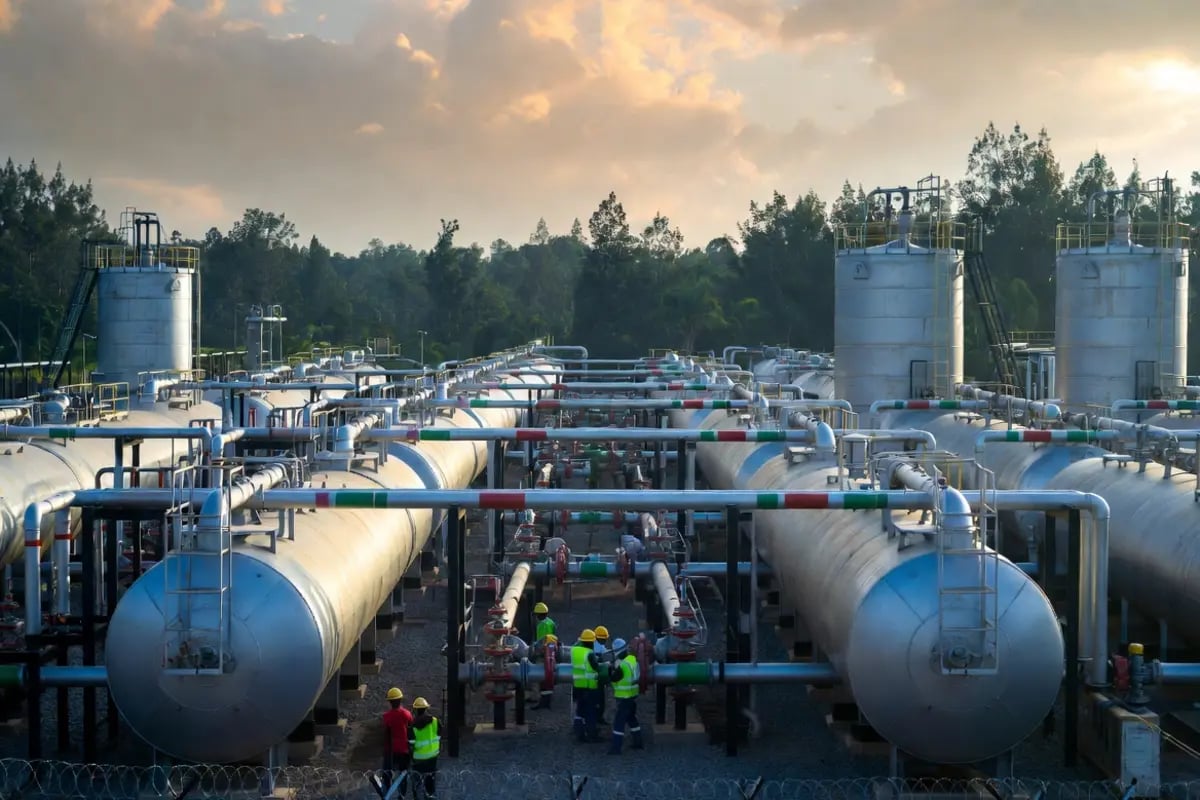
Fuel Storage & Depot Services
Fuel Storage & Depot Services delivered to institutional standard — structured procurement, chain-of-custody discipline, documented handover.
The Challenge
Institutional operations across mining, manufacturing, power generation, marine, and government sectors share a common vulnerability: fuel storage that does not meet procurement or safety protocol often becomes the single point of failure in an otherwise disciplined supply chain. When a bulk fuel holding facility lacks rigorous chain-of-custody documentation, HSE-compliant handling procedures, or verified stock reconciliation at every transfer stage, the downstream consequences — unplanned downtime, regulatory exposure, volumetric loss — accumulate quietly until they become operationally significant.
Across Ghana and Togo, the demand for structured fuel storage and depot services has grown in direct proportion to the scale and complexity of institutional operations. Mines operating remote processing facilities, manufacturers managing high-throughput production lines, and government agencies administering fleet and critical-infrastructure fuel programmes all require a depot partner that brings documented process discipline — not simply bulk holding capacity — to every engagement.
The market gap is not storage volume; it is storage governance. Institutions that source fuel through disciplined procurement channels frequently encounter depot arrangements that offer holding capacity without the documentation architecture, HSE oversight, or transfer accountability that Tier-1 procurement requires. That misalignment creates liability exposure for the client and undermines the integrity of what was otherwise a well-structured procurement event.
The Apex Africa Petroleum Solution
Apex Africa Petroleum approaches fuel storage and depot services as an extension of structured procurement discipline — not as a separate, standalone function. Every depot engagement is designed around chain-of-custody integrity from inbound receipt through to the final metered handover to the client’s receiving asset. Transfer documentation, HSE-compliant handling protocols, and stock reconciliation are not optional layers; they are the operational baseline at which every depot event is conducted.
The methodology begins at the point of inbound fuel receipt, where quantity verification, product specification confirmation, and documentation are executed before any volume enters holding. Throughout the storage period, stock integrity is maintained through regulated access protocols and ongoing reconciliation. At the point of dispatch and handover, metered delivery records, delivery notes, and transfer confirmations are issued to the client’s procurement and operations teams as standard practice.
This approach is built specifically for institutional clients whose procurement, finance, and HSE functions require a fully auditable fuel supply record. Whether the holding arrangement supports a mine’s extended operational cycle, a manufacturer’s continuous production requirement, or a government fleet programme, the documentation architecture remains consistent — because institutional accountability demands consistency at every scale.
Process & Service Specification
- Inbound product receipt with quantity verification and specification documentation at every intake event
- HSE-compliant handling procedures governing fuel transfer, storage condition management, and personnel safety protocols throughout the depot engagement
- Chain-of-custody documentation maintained from inbound receipt through to metered client handover, with full transfer records issued at each stage
- Stock reconciliation at defined intervals, with discrepancy reporting and resolution integrated into the standard depot operating cycle
- Dispatch and handover documentation — delivery notes, metered transfer confirmations, and stock close-out records — issued as standard to client procurement and operations contacts
- Structured access and security protocols governing depot entry, product handling, and transfer authorisation throughout the holding period
Typical Project Profile
A typical depot engagement involves institutional clients operating in mining, manufacturing, power, marine, or government sectors across Ghana and Togo, where continuous or cyclical fuel drawdown against a held stock position must be supported by full documentation and HSE discipline. Engagements range from extended holding arrangements supporting remote mine-site operational cycles to medium-term depot programmes underpinning government fleet fuel management or industrial facility continuous operation. In each case, the engagement is structured around the client’s documented procurement requirements, their HSE obligations, and the audit trail that their finance and compliance functions require.
Outcomes
- A fully auditable chain-of-custody record covering every transfer event from inbound receipt to client handover
- HSE-compliant handling throughout the depot engagement, reducing regulatory and operational risk exposure for the client’s operations team
- Stock reconciliation integrity that supports the client’s procurement and finance audit functions at every period close
- Reduced volumetric loss and documentation discrepancy through structured access protocols and metered transfer discipline
- A depot operating standard aligned to the procurement rigour that Tier-1 institutional operations — mines, manufacturers, power facilities, and government programmes — require as a baseline condition