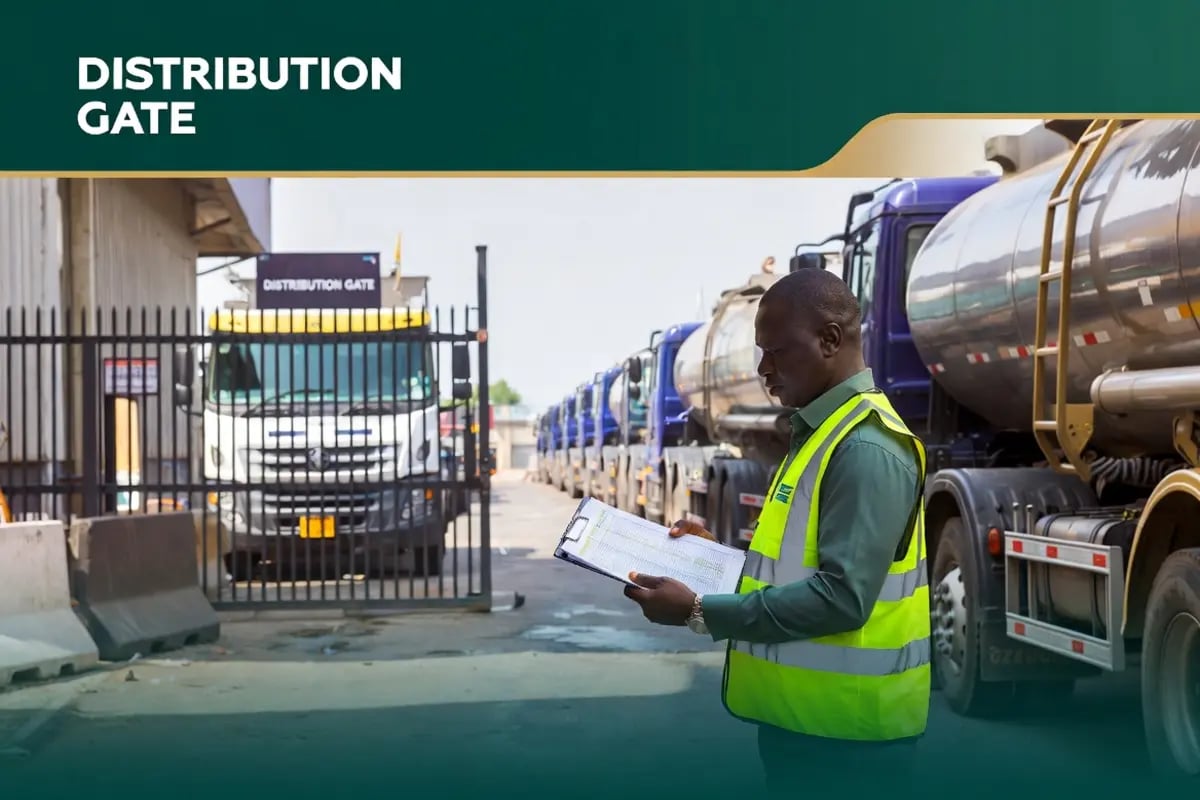
Petroleum Products Distribution
Coordinated distribution of refined petroleum products to operations across Ghana and Togo, scheduled to each site's operating requirements.
What Is Petroleum Products Distribution?
Petroleum products distribution is the coordinated, scheduled movement of refined fuels — gasoil, petrol, kerosene, aviation turbine fuel, and heavy fuel oil — from regulated supply points to active operational sites across Ghana and Togo. It is not a simple haulage arrangement. At the institutional level, distribution encompasses route planning, compartment-verified loading, site-specific scheduling, HSE-compliant transfer procedures, and end-to-end documentation — from loading bay to delivery docket.
Clients who specify structured distribution are typically those whose operations cannot tolerate supply interruption or documentation gaps. Mines running continuous plant, manufacturers on shift schedules, power generation facilities managing fuel reserves, marine operators requiring dockside delivery, and government entities operating under procurement compliance mandates — all require a distribution partner whose discipline matches the weight of their operations.
When to Specify Petroleum Products Distribution
Uncoordinated fuel delivery creates compounding operational risk: undocumented transfers expose procurement audits, late deliveries idle plant, and mismatched product grades damage equipment. Distribution needs to be specified — not improvised — whenever fuel supply is a direct input to production continuity.
Mining operations across Ghana’s extraction corridors specify structured distribution to synchronise fuel reserves with shift patterns and statutory HSE requirements. Industrial manufacturers and power producers in Accra, Tema, and Takoradi require volume-consistent, schedule-anchored delivery to maintain throughput. Marine operations along the Ghana coastline and across Togo’s port corridor require timed, certified product delivery with full transfer documentation. Government and parastatal entities require procurement-aligned supply chains supported by clear audit trails at every transfer point.
Methodology — The Apex Africa Petroleum Specialist Approach
-
Operational Intake and Schedule Mapping — Each distribution engagement opens with a structured intake: site access conditions, tank capacity, current reserve position, operating schedule, and any sector-specific compliance requirements are logged before the first delivery is planned.
-
Product Specification and Sourcing Confirmation — The correct product grade is matched to the client’s equipment specification. Gasoil grades, fuel quality parameters, and any handling requirements are confirmed and documented prior to loading authorisation.
-
HSE-Compliant Loading and Compartment Verification — Product is loaded under regulated conditions, with compartment seals verified and loading documentation completed before the tanker departs the supply point. No consignment moves without a complete pre-departure check.
-
Route-Managed, Schedule-Anchored Delivery — Deliveries are routed and timed to the client’s operational window. Site delivery is coordinated with the client’s receiving team, and transfer is conducted under HSE protocol — supervised offload, meter-verified volume, and signed delivery docket.
-
Documentation Close-Out and Compliance Record — Every distribution cycle closes with a full documentation package: delivery docket, transfer record, product specification confirmation, and HSE sign-off. These records are maintained and made available for client audit or regulatory review at any point.
Products and Supply Standards
- Gasoil (diesel), petrol, kerosene, aviation turbine fuel, and heavy fuel oil — refined products sourced through regulated supply channels
- Product grade verification at point of loading — no unconfirmed substitutions
- Compartment-sealed tanker transport with pre-departure integrity checks
- HSE-led transfer protocol at every delivery point — supervised offload, no self-service arrangements
- Full documentation chain — loading authorisation through to signed client delivery docket
- Compliance-ready record-keeping structured for procurement audit and regulatory review
Outcomes and Operational Assurance
Clients operating under Apex Africa Petroleum’s distribution framework receive consistent, schedule-anchored fuel supply supported by documentation that holds at every audit point. Supply continuity is maintained through proactive schedule management rather than reactive emergency logistics. The discipline applied at every transfer point — from loading verification through to delivery sign-off — ensures that each consignment is traceable, compliant, and matched precisely to the client’s operational specification.
Related Sectors and Solutions
- Mining and Extraction Operations — bulk gasoil distribution calibrated to shift-based consumption patterns across Ghana’s mining corridor
- Industrial Manufacturing and Power Generation — scheduled high-volume delivery to Tema and Accra industrial zones, structured around plant operating windows
- Marine and Port Operations — dockside and coastal delivery across Ghana and Togo’s port corridors, with full transfer documentation
- Government and Parastatal Procurement — compliance-structured supply aligned to public sector procurement mandates and audit requirements