The problem
Institutional buyers need a documented, HSE-disciplined source for petroleum products distribution.
Our approach
Petroleum Products Distribution
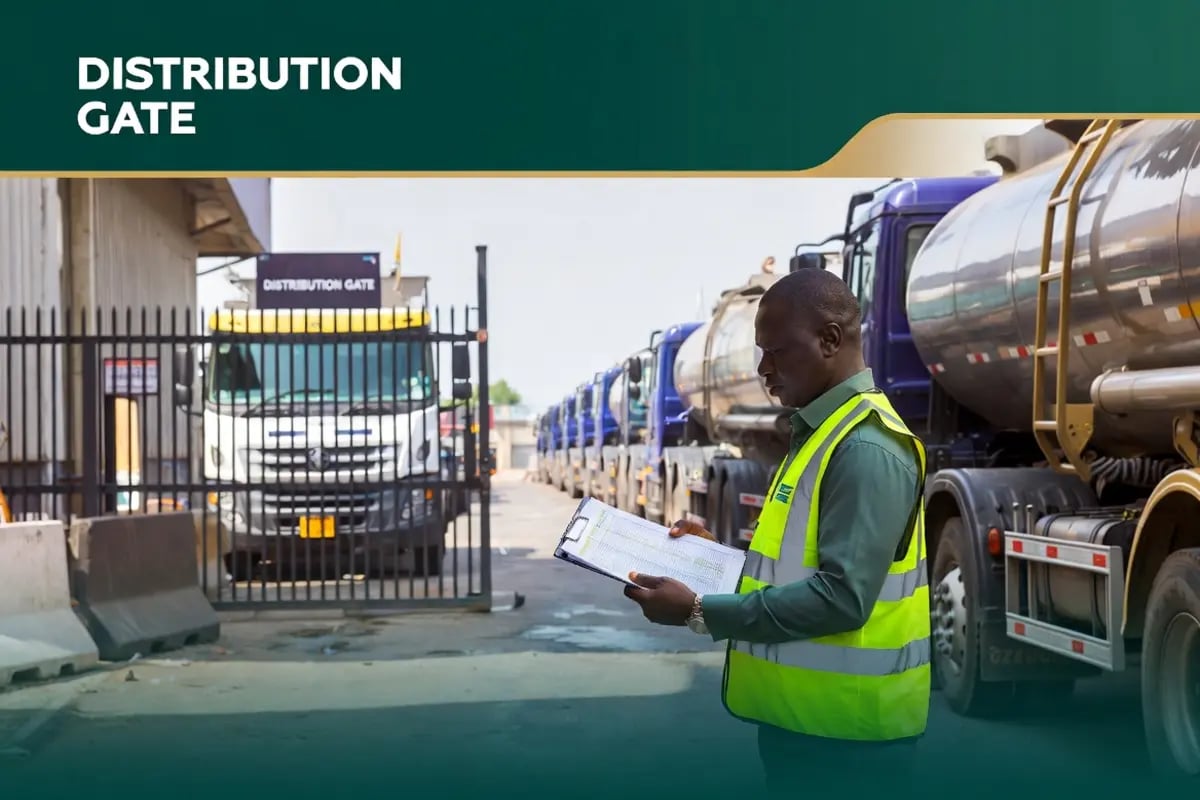
Petroleum Products Distribution delivered to institutional standard — structured procurement, chain-of-custody discipline, documented handover.
The Challenge
Institutional petroleum procurement in Ghana and Togo is not a simple logistics exercise. Mines operating continuous extraction cycles, manufacturers running process-critical equipment, power generators serving essential infrastructure, and marine operations coordinating vessel bunkering — each carries a supply disruption risk that cascades into operational losses within hours. The discipline required to service these environments goes far beyond arranging a tanker delivery.
Procurement structures across the sub-region are frequently fragmented: informal documentation, inconsistent product verification, undefined handover protocols, and chain-of-custody gaps that expose institutions to compliance liability and product integrity risk. A single undocumented transfer can invalidate an audit trail, trigger regulatory scrutiny, or introduce contaminated product into a sensitive process environment. For government operations and large-scale industrial clients, these are not theoretical risks — they are recurring operational vulnerabilities.
The result is a sector that demands a trading and distribution partner operating to the same standard of rigour that a Tier-1 institution applies to its own internal controls: structured procurement, documented every step, with HSE discipline embedded at every transfer point — not added as an afterthought.
The Apex Africa Petroleum Solution
Apex Africa Petroleum approaches petroleum products distribution as a discipline in structured supply chain management rather than transactional logistics. Each client engagement begins with a procurement needs assessment that maps product specifications, consumption cycles, storage infrastructure, and compliance requirements before the first litre moves. This pre-delivery discipline ensures that product selection, volume staging, and delivery scheduling are calibrated to the client’s operational reality, not imposed around the convenience of the supplier.
At every transfer point — terminal loading, in-transit handling, and final site delivery — documentation follows a defined chain-of-custody protocol. Delivery orders, volume verification records, product quality acknowledgements, and HSE handover declarations are generated as standard, not on request. This creates an audit-ready supply record that supports both internal governance and external regulatory compliance for clients operating in sectors where documentation integrity is non-negotiable.
The approach extends across Ghana and Togo, covering the full spectrum of institutional petroleum products — diesel, petrol, heavy fuel oil, and kerosene — within a distribution framework built to reach mine sites, industrial zones, port facilities, and government supply points with equal operational precision.
Supply + Process Specification
- Structured procurement scoping — product type, grade, volume cadence, and storage conditions confirmed prior to order placement
- Chain-of-custody documentation — end-to-end transfer records from terminal loading through to site handover, audit-ready at every stage
- HSE-led handling protocols — health, safety, and environmental controls applied at every transfer point as operational standard, not optional add-on
- Product integrity verification — volume and quality parameters confirmed at loading and re-confirmed at delivery against client-specified requirements
- Compliance-ready documentation packages — delivery notes, volume certifications, and handover declarations formatted to support regulatory and internal audit requirements
- Coverage across Ghana and Togo — distribution capability spanning industrial corridors, coastal facilities, inland mine sites, and government supply locations in both jurisdictions
Typical Engagement Profile
A representative engagement involves a mining operation or large-scale manufacturer with a continuous fuel consumption requirement across multiple on-site storage points. Supply cycles are structured on a scheduled replenishment basis, with volume and timing agreed in advance to prevent operational disruption. Delivery coordination includes site-specific access protocols, designated receiving personnel, and pre-confirmed HSE handover procedures. Documentation packages are compiled per delivery, assembled into consolidated supply records at agreed intervals, and made available for client audit at any point in the cycle.
Outcomes
- Continuous supply reliability for operations where a fuel gap translates directly into production downtime or service disruption
- A complete, audit-ready chain-of-custody record covering every transfer — from terminal loading to final site delivery
- Reduced compliance exposure through HSE-embedded handling protocols and documentation that meets regulatory expectations as standard
- Procurement clarity that replaces informal, reactive purchasing with a structured supply discipline aligned to operational cycles
- A distribution partner operating to institutional-grade process standards across Ghana and Togo — built for the demands of mines, manufacturers, power, marine, and government operations